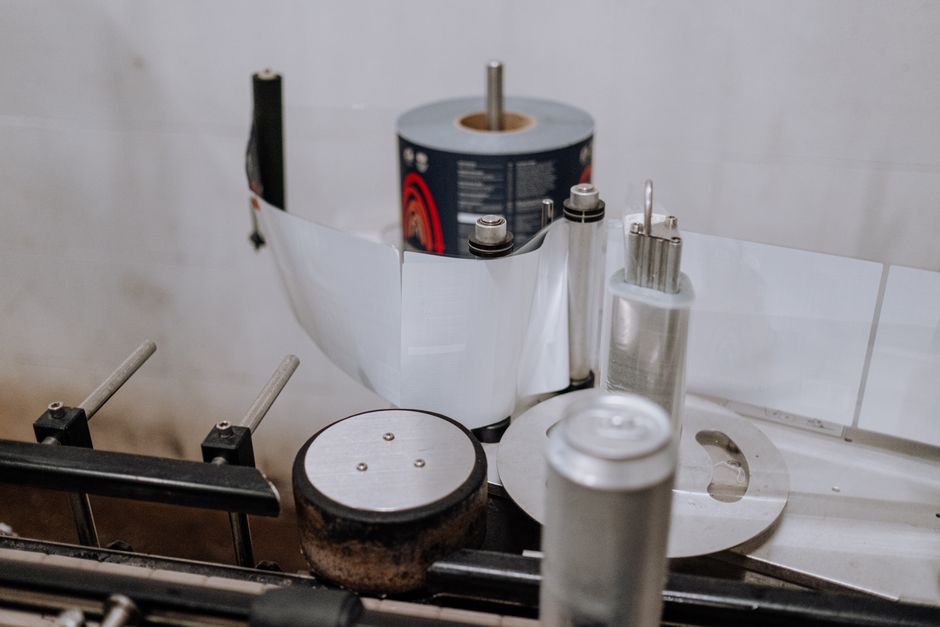
A frozen sauce label and a GHS chemical hazard label have almost nothing in common — different material, different adhesive, different rulebook, different way of failing. “Custom label” is really a dozen jobs wearing one name. Here’s what NJ manufacturers actually run with us, and what makes each type its own animal.
TL;DR
Custom labels split into a handful of very different jobs: food and beverage, craft beverage, nutraceutical and OTC, industrial and chemical, logistics and barcode, and retail and personal care. Each has its own material, adhesive, and compliance demands — a food label answers to the FDA, a GHS label to OSHA, a pallet label to a retailer’s receiving dock. We’ve produced across all of them for NJ manufacturers since 1986, including work for Domino Foods, American Sugar Refining, and Lipo Chemicals.
Below, each category is one tap — open the ones that match your line and skip the rest.
Food, Beverage, and Craft Beverage Labels
Food and beverage is the largest label category by volume for most commercial manufacturers, for a simple reason: every packaged food product moving through retail or distribution needs a label, and most need a lot of them. Craft beverage is its own high-design corner of the same world.
Food and beverage labels
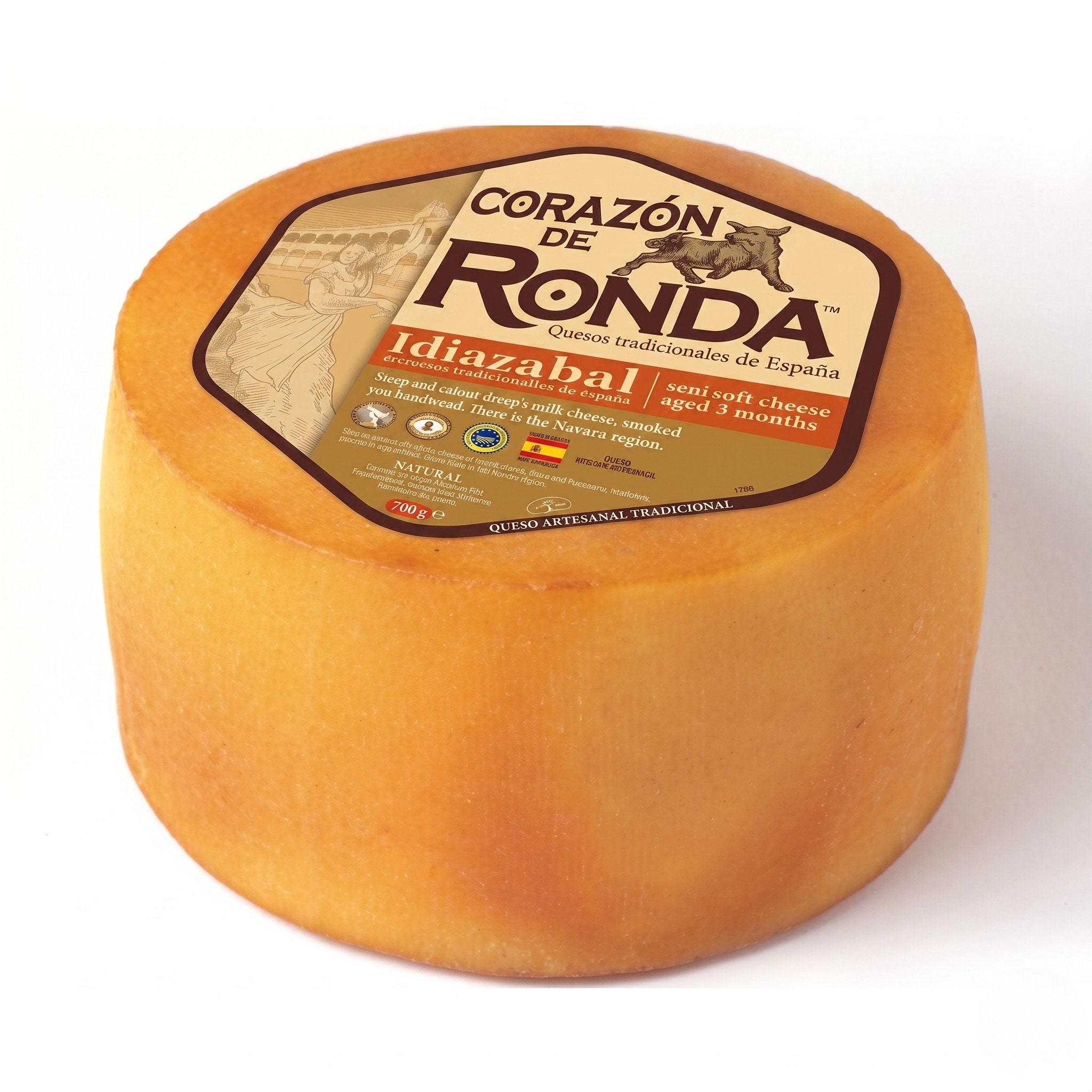
Food and beverage labels use FDA-compliant face stock and adhesive that meet 21 CFR requirements for indirect food contact. They carry the nutrition facts panel, ingredient list, allergen declaration, and net quantity declaration, with the nutrition panel printed at regulatory-required minimum font sizes. Material is chosen for the product’s storage environment: paper for dry ambient goods, BOPP for refrigerated or condensation-exposed products, and clear BOPP for the no-label look on glass or PET containers. The hard part is registration — a nutrition facts table set in 8-point type on a 3” × 4” label is both a compliance and a quality issue if it prints misregistered, ink-spread, or low-resolution. Common examples: sauce and condiment labels, beverage labels (beer, wine, juice, cold brew), frozen food labels, dry goods labels, and co-packer labels for multi-SKU food brands.
Craft beverage labels
Craft brewing, winemaking, and distilling drive strong demand for premium label production across NJ and the surrounding region. These customers want labels that read as premium on the bottle, and the no-label look on glass is increasingly the category standard. That typically means clear BOPP with a white ink underbase, waterproof construction for ice buckets and refrigeration, cold-temperature adhesive for refrigerated distribution, and finishing touches like spot UV and overlaminate for shelf presence. Craft beverage is where design and production meet most visibly: a beautiful label on the wrong material peels in the cooler and destroys the premium impression it was built for.
Pro tip: Match the material to where the label lives, not where it's applied. A label applied warm and dry but sold from an ice-filled cooler needs cold-temperature adhesive and waterproof stock, or it curls at the worst possible moment — on the shelf, in front of your buyer.
Pharmaceutical, Nutraceutical, and Industrial Labels
Two very different worlds share a common thread: the label is a compliance document first and a marketing surface second. Get an element wrong and you’re not looking at a reprint — you’re looking at a regulatory problem.
Nutraceutical, OTC & personal care labels
Supplement, OTC, and personal care labels carry a heavy compliance burden — every required element must be present, legible, and accurate. They use FDA-compliant materials and inks and carry a Supplement Facts or Drug Facts panel at specified font sizes. Most are not static: every production batch has a unique lot number and expiration date (variable data), and many supplement and OTC programs add a unique serial number and GS1 DataMatrix on every unit. OTC and personal care products often add tamper-evident construction. Producing these correctly requires variable data printing infrastructure and 100% inline barcode verification on serialized runs, not just a standard label press.
Industrial and chemical labels
NJ has a substantial industrial base — chemical processors, industrial distributors, and manufacturers that need labels durable enough to survive the environment they’re used in. GHS chemical hazard labels, required by OSHA HazCom 2012 for all hazardous chemical containers, must carry the six required elements (signal word, pictograms, hazard statements, precautionary statements, product identifier, supplier ID) on durable polyester or vinyl rated for chemical exposure. OSHA safety and ANSI Z535 equipment warning labels use polyester or vinyl face stock rated for indoor and outdoor industrial use. Asset and equipment tags pair polyester with high-tack adhesive and overlaminate for multi-year durability. High-temperature labels for motors, ovens, and exhaust components use polyester with high-temperature adhesive rated to 300°F continuous.
Barcode and Logistics Labels
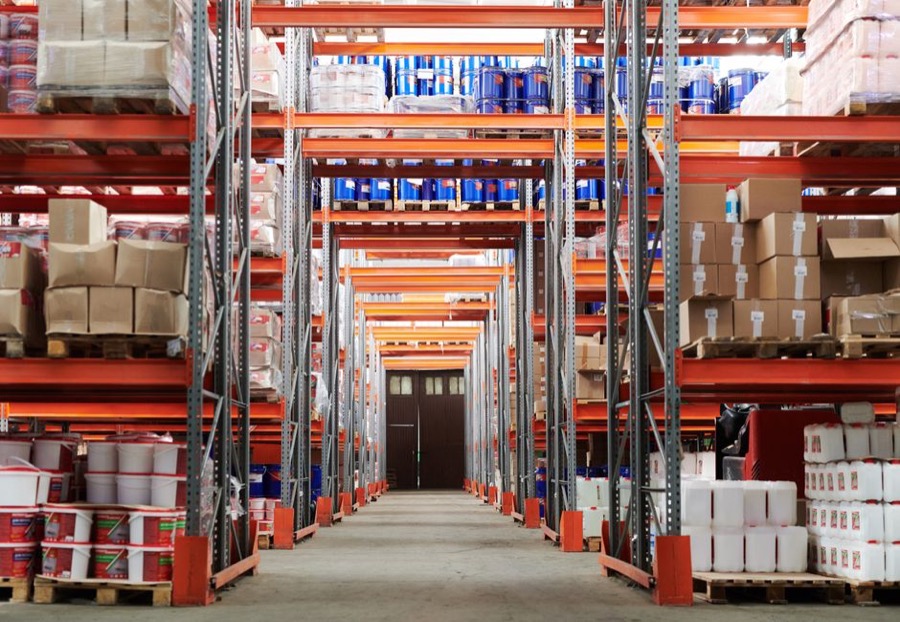
Supply chain labels — shipping labels, pallet labels, warehouse labels, inventory tags — are a high-volume category produced in bulk for distribution operations. Here the demands are volume, speed, and barcode quality, because a label that doesn’t scan at a retailer’s receiving dock generates an immediate chargeback. ANSI/ISO barcode verification is standard on all logistics label production we run.
GS1-128 shipping carton labels
Required by major retailers for inbound cartons, GS1-128 carton labels encode the GTIN, quantity, and retailer-specific data in GS1-128 symbology. Barcode quality is non-negotiable — the label has to scan cleanly at speed on a receiving line, every time.
SSCC pallet labels
Required by Walmart, Target, Amazon, and most major DC operations, SSCC pallet labels go four to a pallet — one on each side. The SSCC-18 barcode links to the EDI 856 Advance Ship Notice, so a mis-scanned or missing pallet label breaks the electronic handshake with the retailer’s system.
Thermal labels for in-house printing
Many warehouses and distribution operations print their own variable labels in-house on Zebra or Datamax thermal printers. As an authorized Zebra® and Datamax® dealer, we supply blank thermal stock configured for the specific printer models a facility runs, so the label and the printer are matched from the start.
Retail Consumer Goods and Personal Care
Personal care, household products, and specialty consumer goods need labels that are both visually appealing and functionally durable — the label has to sell the product and survive the product.
Personal care and cosmetics
Shampoo, lotion, cosmetics, and supplement bottles in plastic or glass typically use BOPP or polyester face stock with permanent adhesive. For premium products on transparent containers, clear BOPP with a white underbase delivers the no-label look that makes the product appear printed directly on the bottle.
Household products
Cleaning products, garden supplies, and specialty household items often ship in HDPE or polypropylene containers. Those are low-energy surfaces, which means the adhesive has to be high-tack to grip and stay put — the wrong adhesive lifts at the edges within days.
Specialty consumer goods
Candles, artisan food products, and specialty health and wellness goods span many container materials and finishes. The common thread is that the label has to match the brand positioning of a premium, handcrafted product — the finish and material carry as much of the message as the artwork.
Viewing Our Work
The best way to judge label production quality is to see it in your hand. Our gallery shows finished labels across food, personal care, specialty, and industrial categories — real products produced on our presses for NJ and regional customers.
If there’s a specific label type or industry you want to dig into, we’re happy to pull relevant examples from our production history during a quote conversation. And if you’re weighing a move from your current printer, our guide to switching label suppliers walks through how that actually works.
Custom label manufacturing isn’t one thing — it’s a dozen different products, materials, and rulebooks, each with its own way of going right or wrong. We’ve been producing across all of these categories for New Jersey manufacturers since 1986. Want to talk through your specific application? Call (908) 495-6235 or request a quote — we’ll tell you exactly how we’d approach your label program.