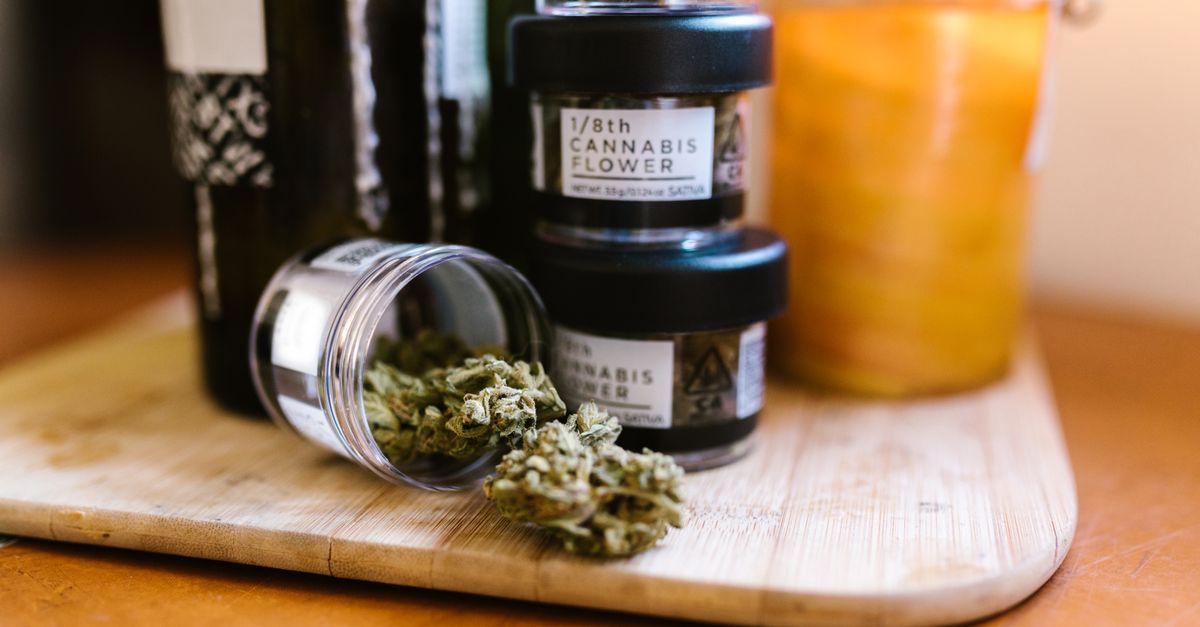
In New Jersey’s legal cannabis market, the label isn’t an afterthought — it’s part of the product’s compliance file. Get it right and it never comes up again. Get it wrong and it can stop a whole batch at the dispensary door.
Every cannabis product sold through a licensed NJ dispensary or delivery service must carry a specific set of label elements defined by the Cannabis Regulatory Commission (CRC): license info, product identity, net weight, cannabinoid content, batch/lot number, dates, verbatim warning statements, the universal cannabis symbol, and testing information. Missing or non-compliant labels can trigger product holds, failed inspections, and license sanctions — so most of these labels need variable data printing to carry lot-specific batch numbers and cannabinoid percentages.
New Jersey’s legal cannabis market is regulated by the Cannabis Regulatory Commission (CRC), which enforces detailed labeling requirements for every product sold through licensed dispensaries and delivery services. This is the working breakdown of what belongs on the label, what’s prohibited, and how to get it printed without a compliance headache.
Who NJ Cannabis Labeling Requirements Apply To
CRC labeling requirements apply to all cannabis items sold through licensed retail dispensaries, delivery services, and the adult-use market in New Jersey. That covers:
- Usable cannabis (flower)
- Cannabis concentrates and extracts
- Cannabis-infused products (edibles, beverages, tinctures, topicals)
- Vape cartridges and hardware sold with cannabis
Both medical and adult-use cannabis products must comply with CRC labeling rules, though there are some distinctions in the required statements between the two markets. If you hold a cultivator, manufacturer, or distributor license, the responsibility to get the label right lands on you.
The Required Label Elements, One by One
The CRC requires a defined set of information on every cannabis product label. Tap any element for the specifics — each one is self-contained, so you can hand it straight to your compliance team.
License information
The label must carry the name of the licensed cannabis business and the NJ CRC license number of the cultivator, manufacturer, or distributor responsible for the product. Confirm the license number is current before it goes to print — an outdated or transposed number is one of the easiest ways to fail a review.
Product identity
Include a common name or description of the product — for example “cannabis flower,” “cannabis concentrate,” or “cannabis-infused edible” — plus the strain name for flower or the product name for everything else. The buyer should be able to tell exactly what’s in the package from the label alone.
Net weight or volume
Declare net weight in both metric (grams or milligrams) and US customary units, or net volume for liquid products. For edibles with multiple servings, the label must state both the total content and the per-serving content.
Cannabinoid content
State the THC content — total THC percentage for flower and concentrates, or milligrams per serving and milligrams per package for edibles and other infused products — along with CBD content where applicable. The CRC specifies that THC be calculated as total THC, including THCA converted via decarboxylation: Total THC = THC + (THCA × 0.877). All cannabinoid figures must come from laboratory testing by a CRC-approved facility.
Batch / lot number
Include a traceable batch or lot number that links to your seed-to-sale tracking system. New Jersey uses the Metrc track-and-trace system, and the lot number is what enables recalls and regulatory traceability. This is the field that changes with every production run — it’s the main reason cannabis labels need variable data printing.
Harvest or production date
Show the date of harvest for flower, or the date of manufacture for infused products and concentrates. Like the batch number, this is lot-specific and changes run to run.
Expiration or use-by date
An expiration or use-by date is required for infused products and edibles. Including one on all products — even where it isn’t strictly required — is good practice and keeps your labeling consistent across your line.
Required warning statements (verbatim)
All NJ cannabis products must carry specific warnings, and the CRC requires these to appear verbatim. For all cannabis products: “This product contains cannabis. Keep out of reach of children and animals.” Also for all products: “Cannabis can impair concentration, coordination, and judgment. Do not operate a vehicle or machinery under the influence of this drug.” For edibles and infused products, add: “There may be health risks associated with consumption of this product.” Because these are verbatim requirements, copy them exactly — no paraphrasing, no trimming to fit.
Universal cannabis symbol
NJ requires the universal cannabis symbol — an exclamation mark inside a triangle — on all cannabis product labels. The symbol must be at least ¼ inch in height. Build it into your artwork at the correct size rather than shrinking it to make room for other content.
Testing information
Include the name of the NJ CRC-approved testing laboratory. A Certificate of Analysis (COA) reference or a QR code linking to the COA is recommended, and required in some formats. Since the COA and lab results are tied to each lot, this is another element that pairs naturally with variable data.
Tamper evidence & packaging
Cannabis retail packaging must be child-resistant and, where applicable, tamper-evident. The label itself must not obstruct the tamper-evident feature — so plan the label placement around the seal, not over it.
Watch out: CRC labeling compliance is checked during dispensary inspections, and non-compliant products can be pulled from sale. A missing warning statement, an undersized symbol, or an outdated license number can mean product holds, failed inspections, and license sanctions — not a quiet fix-it-later note. Have your compliance team sign off on the artwork before it ever reaches the press.
What Cannot Appear on a NJ Cannabis Label
The CRC prohibits labeling content that:
- Appeals to minors — no cartoons, characters, or imagery primarily associated with children, and no candy, fruit, or dessert imagery that could attract minors.
- Makes health claims — no claims that cannabis treats, cures, or mitigates any disease or condition, and no therapeutic claims that aren’t substantiated by FDA-approved processes.
- Makes false or misleading statements — everything on the label must be accurate and not deceptive about the product’s identity, content, or effects.
- Uses the word “organic” — unless the product meets all applicable organic certification standards, which is extremely rare for cannabis.
Label Size and Readability Requirements
The CRC requires that all mandatory label information be:
- Legible — printed at a font size readable without magnification, with warning statements prominently displayed. The CRC specifies minimum font size requirements for required content.
- In English — required statements must appear in English; additional languages are permitted alongside them.
- Not obscured — required information can’t be covered by stickers, secondary labels, or shrink wrap.
For small packages where everything won’t fit on the primary label, the CRC permits a supplemental or fold-out label — but every required element still has to be present in an accessible form.
Choosing the Right Label Material
Cannabis labels have to survive the product’s full lifecycle — production, dispensary storage, and consumer handling — without peeling, wrinkling, or going illegible. The right face stock depends on the container:
| Container | Recommended construction |
|---|
| Flower jars & concentrate jars | White BOPP or polyester with permanent adhesive — holds up to retail handling and stays legible through shelf life |
| Child-resistant pouches | A face stock and adhesive confirmed compatible with your specific film or pouch material |
| Vape cartridges | BOPP with a conformable adhesive that wraps the curve without wrinkling |
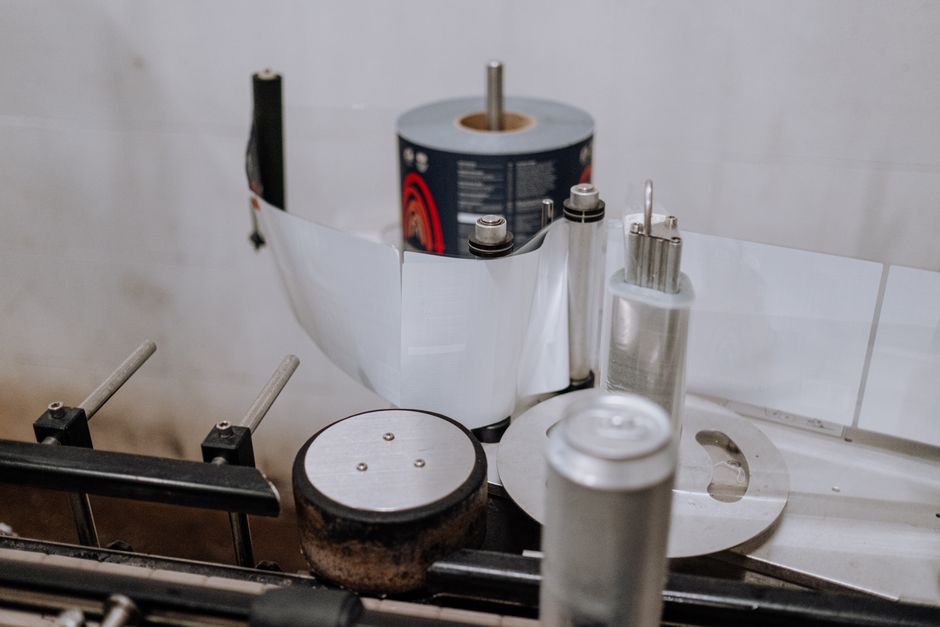
If your packaging uses a tamper-evident label or seal, confirm the construction supports it. We match the face stock and adhesive to your container and run inline video web inspection on the job so every label leaves the press readable.
How to Order CRC-Compliant Cannabis Labels
Because so much of a cannabis label changes lot to lot, most of these jobs run as variable data printing. Here’s what to have ready when you send them over:
- Complete artwork with every required CRC element included and reviewed by your compliance team.
- Your license number, confirmed current and accurate.
- Your variable data fields — batch/lot numbers, harvest or production dates, and THC/CBD content by lot.
- Your product type and packaging format, so we can match the right material and adhesive.
We produce cannabis labels with variable data printed inline, including batch numbers and lot-specific cannabinoid percentages, so the traceable fields are right on every label without a separate print step. Our facility is in Hillsborough, NJ, and while we serve cannabis operators throughout New Jersey, we produce compliance labels for regulated industries — pharmaceutical, food, and cannabis — with the batch-level traceability those markets demand.
Need CRC-compliant cannabis labels? Call (908) 495-6235 or request a quote, and we’ll help you get artwork that clears inspection and material that lasts the product’s full shelf life.