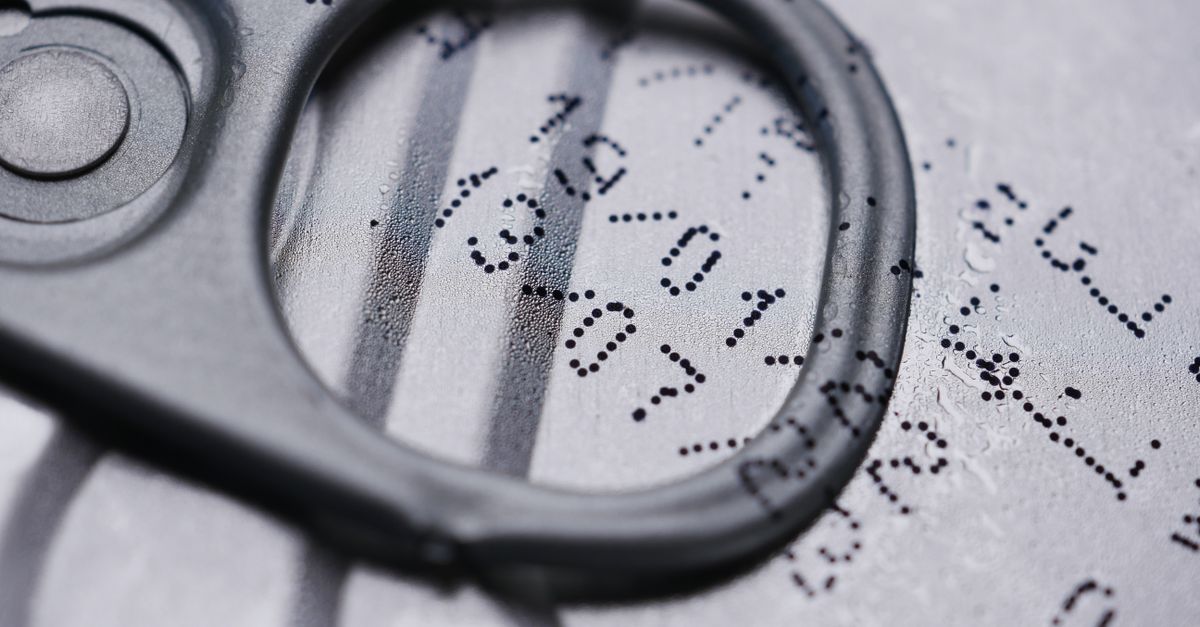
Most labels are clones. Every one in the run is identical, down to the last dot. Variable data printing is where that stops — same design, same logo, same layout, but a field or two changes on every single label. And for a lot of industries, that changing field isn’t a nice-to-have. It’s the law.
Variable data printing (VDP) prints a unique value — a serial number, lot code, expiration date, barcode, or QR code — on each label in a run, even though the rest of the design stays the same. You need it when a regulation or a retailer requires every unit or pallet to be individually identifiable: pharmaceutical serialization (DSCSA), SSCC pallet labels, and lot-level traceability for food and supplements are the big ones.
What “Variable Data” Actually Means
Variable data is any content that changes from one label to the next inside a single print run. The design is locked; the data underneath it moves. Here’s what “variable” usually looks like in the real world:
Good to know — the usual variable fields:
- Sequential serial numbers — 00001, 00002, 00003… as human-readable text, as a barcode, or both.
- Lot or batch numbers — which production batch a unit came from. This is the field that makes a recall surgical instead of catastrophic.
- Expiration / use-by dates — fixed per batch, or calculated per unit.
- Unique barcodes — each label encodes data unique to that unit: a serial number, an SSCC for a pallet, or a GS1 DataMatrix packing several fields at once. The value changes every label; the position and design don't.
- QR codes with unique URLs — each code links to a different URL or product ID. Common for authentication, consumer engagement, and track-and-trace.
- SSCC pallet codes — every pallet gets a unique 18-digit Serial Shipping Container Code. No two pallets in history should ever share one.
Notice the pattern: the artwork is static, the data is dynamic. That’s the whole idea. A press setup that would produce 50,000 identical labels instead produces 50,000 labels that are 95% identical and 5% completely unique — and that 5% is the part that has to be exactly right.
The Industries That Actually Require It
Some businesses use VDP because it’s convenient. Others use it because their product legally cannot ship without it. Tap through the ones that apply to you — each is self-contained, so you can skip straight to yours.
Supplement & OTC — serialization and traceability
Supplement, OTC, and personal care programs increasingly put a unique product identifier on every unit: a GS1 DataMatrix encoding the product’s GTIN, a unique serial number, the lot number, and the expiration date. That makes every serialized supplement or OTC label a variable data label by definition. The serialization data often has to be shared with trading partners and retailers, and the barcode is the physical proof of that data, so it has to be correct and it has to scan.
Food and beverage — lot and date codes for recalls
FDA food safety rules and FSMA-aligned traceability programs increasingly require lot number and production date coding on food labels. In a recall, lot numbers let you pinpoint the affected product; without them, a recall may have to sweep an entire product line instead of a few specific runs. On top of the regulatory floor, major grocery retailers increasingly demand lot and date code traceability from their supplier base as a condition of doing business.
Logistics and distribution — SSCC pallet labels
Every pallet shipping to a major retailer or 3PL needs an SSCC label: a GS1-128 barcode encoding a unique 18-digit Serial Shipping Container Code, transmitted in the EDI 856 Advance Ship Notice before the pallet arrives at the DC. Warehouse location labels, license plate labels, and receiving labels in modern WMS setups are frequently variable too — each carries a unique identifier the system uses to track where inventory is and where it’s going.
Nutraceuticals and dietary supplements — lot and expiration
FDA’s cGMP regulations for dietary supplements (21 CFR Part 111) require lot number and expiration date on supplement labels. Same logic as food: lot-level traceability turns a full product withdrawal into a targeted recall of only the affected batches.
Asset tracking and industrial inventory — unique IDs
Equipment tags, tool tags, and asset labels often carry a unique serial number or asset ID that links back to a database record. These count as variable data labels even when the variable part is simple — an asset number rather than full GS1 serialization.
VDP vs. Static Printing: What Actually Changes on Press
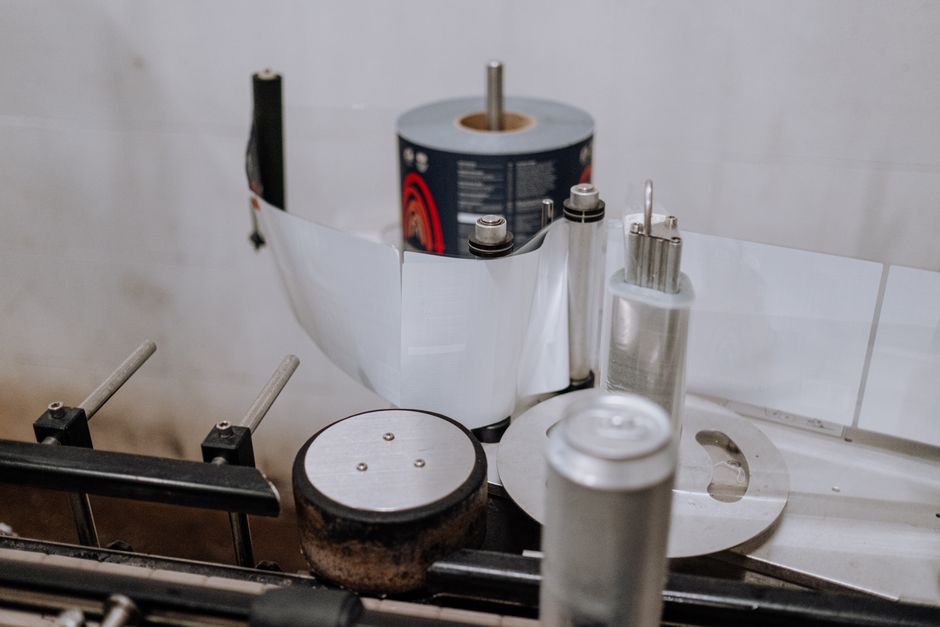
In static printing, the press is set up once and runs the same label until the order’s done. In variable data printing, the press has to pull a fresh value for every label and apply it on the fly — which means it’s connected to a data stream, not just running on autopilot. There are two common ways we do that:
| Approach | How it works | Best for |
|---|
| Inkjet-over-flexo (hybrid) | The label base — design, logos, brand elements — prints on the flexographic press. An inline inkjet or laser head lays down the variable content (barcode, serial number, date) as the web passes through. | High-volume pharmaceutical and food runs where you want flexo quality plus per-label data. |
| Full digital VDP | A digital press pulls from a variable data file and prints both static and variable elements in a single pass. | Shorter runs where flexo’s setup cost isn’t justified. |
Not sure which side of the line your job falls on? That’s a normal question — the answer depends on volume, substrate, and how the data reaches us. Curious how flexo fits into all this? Our flexographic printing explainer covers the base-printing half of the hybrid approach.
How to Supply Your Data File
Your labels are only as good as the file behind them, so this part matters. We accept variable data in:
- CSV — the simplest format. One row per label, column headers naming each variable field.
- Excel (.xlsx) — same structure as CSV, and often the one people already have.
- Delimited text files — pipe-delimited, tab-delimited, or other structured formats.
For GS1 serialization with Application Identifier encoding, check-digit calculation, or specific formatting rules, our prepress team validates the data structure with you before anything runs.
Watch out: we don't start a variable data run without confirming the data file produces correct output on a test label first. A serialization run that skips or duplicates a number creates a traceability gap that's painful to untangle after the fact — far easier to catch it on a proof than on a pallet.
100% Inline Barcode Verification
Here’s the part that separates “we can print variable data” from “we can print variable data you can stake a recall on.” On variable data runs — especially pharmaceutical serialization and GS1 compliance jobs — we offer 100% inline barcode verification. Every barcode is read and graded against ANSI/ISO standards as the web passes through the press. Any label that fails the minimum grade gets flagged, rejected, and rerun.
Why it’s worth doing on every unit, not a sample:
Pro tip: a barcode that fails downstream is far more expensive than one caught on press. A DSCSA-serialized unit that won't scan at the pharmacy can't just be re-serialized. A single unreadable SSCC can make a retailer's automated receiving system reject a whole pallet. And sequential numbering that skips or duplicates leaves a traceability hole that's genuinely hard to close later.
Verification data — ANSI/ISO grade, read rate, and any rejection events — can be handed back as a report for your records. If your regulatory program needs documentation, you’ve got it.
What to Tell Us When You Inquire
The faster we get these five things, the faster we can quote accurately and validate your file:
- What data is variable — serial numbers, lot codes, dates, barcodes, QR codes, or some combination.
- Barcode type — GS1 DataMatrix, Code 128, QR Code, GS1-128, SSCC-18, etc.
- Data source — how you'll supply it: CSV, Excel, or direct system integration.
- Verification requirement — do you need 100% inline verification and grade reporting?
- Regulatory program — DSCSA, GS1 retail compliance, food traceability. The context shapes how we handle verification and documentation.
Bottom line: variable data printing is required, not optional, for pharmaceutical serialization, SSCC pallet labeling, and traceability across food, supplement, and industrial markets. If your product moves through a regulated supply chain, VDP is already part of your label program — the only question is whether it’s being done right. We’ve been producing variable data labels for pharmaceutical, food, and industrial manufacturers from Hillsborough, New Jersey since 1986, and we ship them well beyond the tri-state.
Got a serialization or SSCC job coming up? Send us your specs and a sample of your data file — call (908) 495-6235 or request a quote, and our prepress team will validate the file before a single label runs.