Somewhere right now, a buyer with a great product and a modest first order is discovering that the label quote has a floor: a minimum order quantity. It feels arbitrary. It isn’t. Understanding why the floor exists is the difference between fighting it and making it work for you.
Real numbers first: at CLS, flexographic minimums typically run 5,000 to 10,000 labels depending on size and complexity, and digital short runs through our partner facilities start at 250–500 labels. The reason for the gap: flexo carries fixed setup (plates, press registration, color dial-in) that has to spread across enough labels to make sense. Digital skips the plates — smaller minimum, higher per-label price.
Why the Minimum Exists at All
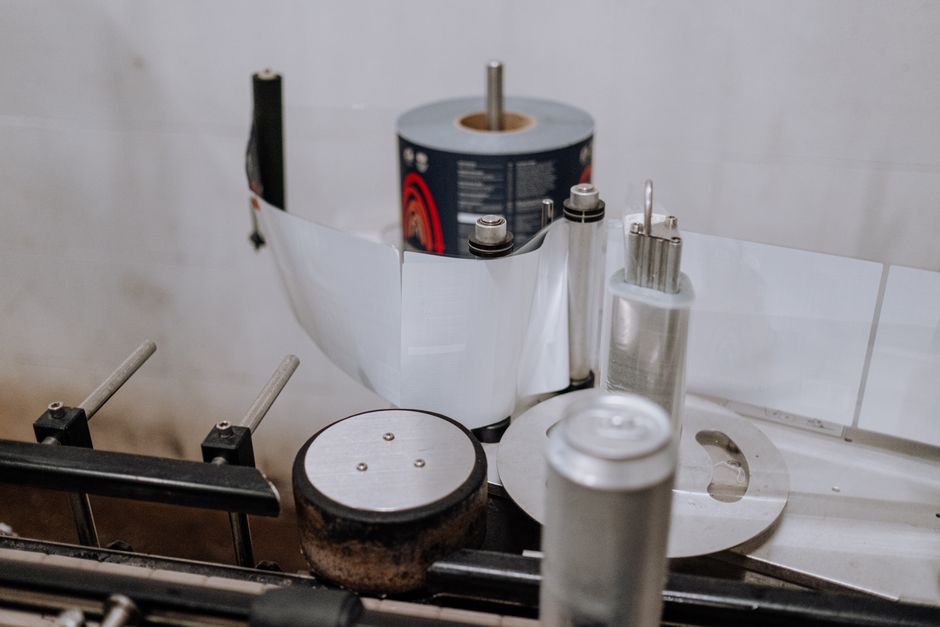
A flexographic press doesn’t just start printing. First, plates get made — one for each color in your design. Then the press is threaded, the plates are registered to each other, and color is matched and dialed in. Only after all of that does the first sellable label come off the press.
Here’s the part that explains everything: that setup work costs roughly the same whether you then run 500 labels or 50,000. Setup is a fixed cost. Spread it over a big run and it nearly disappears from the per-label price; spread it over a tiny run and the setup costs more than the labels. A flexo MOQ isn’t a manufacturer being difficult. It’s the point below which you’d be paying mostly for setup and hardly at all for labels.
We walked through the full cost mechanics in our pricing guide; the short version is that quantity is the single biggest lever in what a label costs.
The Two Sides of the Line
Flexographic
Digital
Minimum
5,000–10,000 labels
250–500 labels
Setup
Plates, registration, color dial-in
None (no plates)
Per-label price
Lowest at volume
Higher, but flat
Best for
Products you reorder
Launches, tests, seasonal runs
Reorders
Plates on file, often ship in a week
Same quick path every time
Flexo is the production standard for labels you’ll reorder: established products, growing SKUs, anything measured in cases per week. The plates become an asset, kept on file so every reorder skips straight to press. Digital, which we run through partner facilities and disclose upfront, is the right tool for product launches, test markets, farmers-market batches, seasonal editions, and regulatory relabels. The honest comparison between the two processes deserves its own article, and it has one: flexographic vs. digital label printing.
The question that picks your side: not "how many do I need right now?" but "how many will I use this year?" A buyer who needs 2,000 labels today but 30,000 across the year is a flexo customer making a digital-sized order, and paying digital prices for it.
How many labels will you actually use in the next 12 months?
Digital is your lane for now. Short runs through our partner facilities start at 250–500 labels with no plate costs, so nothing gets spent on setup or inventory you may not use. Treat it as the launch phase and revisit flexo when reorders start feeling frequent. Get a short-run quote →
You're in the crossover zone. Right around the flexo minimum, the better process depends on label size, color count, and how the volume spreads across the year, so this is exactly the situation where we quote both and show you the math side by side. Send your specs, get both numbers →
You're a flexo customer. At this volume the setup cost spreads thin, your plates and dies stay on file, and reorders often ship in a week or less. The money question isn't the minimum anymore; it's ordering to your annual usage instead of paying setup on repeat. Get a flexo quote →
The Expensive Habit: Small Orders on Repeat
The most common MOQ mistake isn’t ordering too few once. It’s ordering the minimum over and over. Six orders of 10,000 labels means paying press setup six times for volume that could have paid it once or twice. The labels are identical; the invoices aren’t.
If your product is established and your design is stable, ordering to your real annual usage is the single easiest way to cut your per-label cost without changing anything about the label itself. Storage is cheap; setup isn’t. And with your plates and dies on file at CLS, reorders typically ship in a week or less, so you don’t need to warehouse a year of labels to escape the setup treadmill either. A sensible middle exists: fewer, larger orders timed to your usage.
What Moves the Minimum Up or Down
“5,000 to 10,000” is a range because labels aren’t one product. What pushes a specific job toward one end:
Label size. Small labels run many-across on the press web: a run of 5,000 tiny labels is over in minutes, which pushes minimums toward the higher end to justify setup. Bigger labels work the other way.
Color count. Each color adds a plate and registration time. A six-color job carries more setup to amortize than a one-color job.
Tooling. Standard die shapes from our in-house library (thousands on hand) carry no tooling charge; a custom shape adds a one-time die cost that also wants volume to justify it.
Get Your Real Number, Not a Range
The way out of the range is unglamorous: send the spec. Here’s everything a quote actually needs:
Label size — width and height (we run anything from 0.25” × 0.25” up to 16” × 24”).
Color count — how many colors, and whether any need PMS matching (we print up to 7).
Material or surface — what the label sticks to and what it has to survive: refrigeration, freezer, chemicals, outdoors.
Shape — standard shapes from our die library usually carry no tooling charge; a custom shape is a one-time die cost.
Annual volume — your real usage for the year, not just this order.
Send those five and the minimum stops being a range: we quote your actual number, both processes where it’s close, with a response within one business day.
When You’re Under the Minimum
No shame in it — every product starts somewhere. If your volume genuinely fits under the flexo floor:
Go digital for now (250–500 minimum through our partner facilities, disclosed upfront) and treat it as the launch phase.
Watch your reorder rhythm. The month your digital reorders start feeling frequent is the month flexo starts making sense. And because we quote both, the switch is a conversation, not a new supplier search.
Don’t inflate your order to chase a lower unit price you’ll throw away. Labels have shelf lives too: designs change, regulations update, rebrands happen. Unused inventory is the most expensive “cheap” label there is.
Prefer to talk it through? Call (908) 495-6235 or send us your specs and we’ll quote both processes where it’s close, with a response within one business day.
Frequently asked questions
What is the minimum order quantity for custom labels?
It depends on the printing process. For flexographic production at Certified Labeling Solutions, minimums typically run 5,000 to 10,000 labels depending on label size and complexity. For short runs, digital printing through our partner facilities brings the minimum down to 250–500 labels, with no printing plates required. The right side of that line depends on your annual volume, not just this order.
Why do label manufacturers have minimum order quantities?
Because flexographic printing has real fixed setup: printing plates are made for the job (one per color), the press is threaded and registered, and color is dialed in before the first sellable label comes off. That work costs roughly the same for 500 labels as for 50,000, so below a certain quantity, setup would cost more than the labels. The MOQ is the point where the math starts making sense for both sides.
Can I order fewer labels than the flexographic minimum?
Yes — through digital printing, which skips plates entirely. Digital short runs through our partner facilities start at 250–500 labels, which fits product launches, test markets, seasonal SKUs, and regulatory relabels. The per-label price is higher than a flexo run, but there's no tooling cost and no wasted inventory.
Does ordering more always make each label cheaper?
Per-label cost falls as quantity rises, because fixed setup spreads across more labels, but the curve flattens. The biggest savings happen between a too-small order and a right-sized one; going from big to enormous helps less. The practical move is ordering to your real annual usage instead of paying setup repeatedly on small orders.
Labels giving you a headache?
Send us a sample, artwork, or just your specs — we'll quote it fast. Manufacturing in Hillsborough, NJ since 1986, shipping nationwide.