“How much do custom labels cost?” is the most-asked question in this industry, and the least answered. Most label company websites dodge it entirely, and we understand why: every custom label is manufactured to a spec, so a price without a spec is a guess. But “it depends” is a lazy answer unless someone shows you exactly what it depends on. That’s this article.
Custom label pricing comes down to six factors: quantity, label size, number of colors, material, finish and adhesive, and tooling. Quantity matters most, because press setup is largely a fixed cost — spread it over more labels and the price of each label falls steeply. The only honest way to get your number: send your specs (or a sample) to a manufacturer and get a real quote. At CLS, that takes one business day.
Why No Honest Manufacturer Publishes a Price List
A t-shirt company can publish prices because every medium white tee is identical. Labels don’t work that way. A 2” round paper label for a dry pantry jar and a 2” round film label that has to survive an ice bath are different products with different materials, different adhesives, and different production requirements — even though they look the same size on a screen.
When an ad promises a flat pennies-per-label price online, one of two things is true: it describes the cheapest possible spec at an enormous quantity, or it’s bait that gets revised once someone looks at your actual artwork. Either way, it tells you nothing about your label. The six factors below do.
The Six Factors That Set Your Label Price
1. Quantity — the one that dominates everything
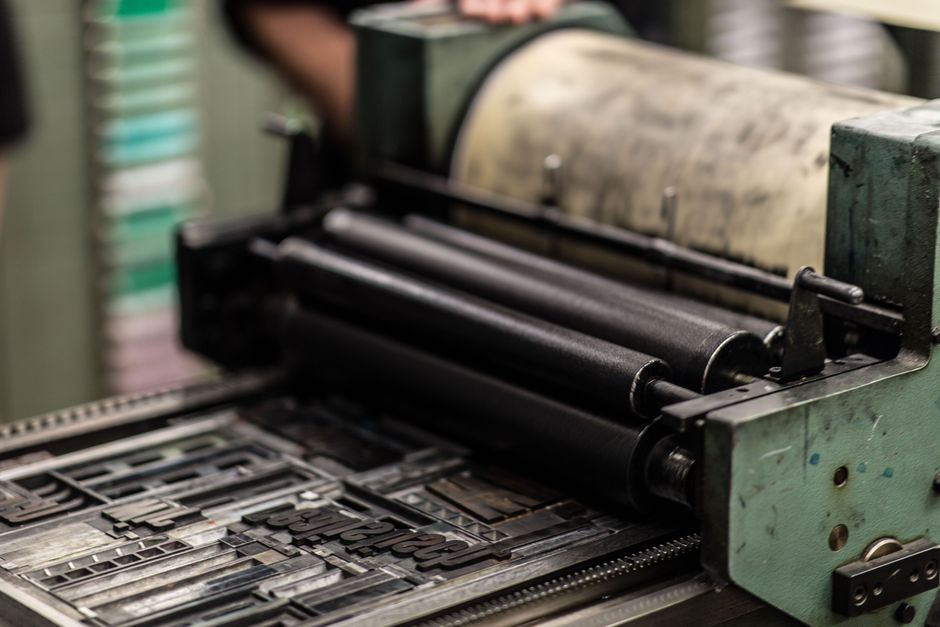
Flexographic printing (the standard process for production label runs) has real setup work: printing plates are made for the job, the press is threaded and registered, and color is dialed in before the first sellable label comes off. That setup effort is roughly the same whether you then run 5,000 labels or 500,000.
This is the single most important idea in label pricing: setup is fixed, so per-label cost falls as quantity rises. Doubling your order does not double your bill. The setup is already paid for, and you’re mostly adding material and press time. It’s also why flexo minimums exist: at CLS, flexographic minimums typically run 5,000 to 10,000 labels depending on size and complexity, because below that the setup outweighs the run. Need less? Short runs are better served digitally. We produce them through our digital print partners with minimums as low as 250–500 labels, no plates required.
If you’re weighing the two processes, we’ve written a full comparison: flexographic vs. digital label printing.
2. Label size
Bigger labels use more material per label, and fewer of them fit across the press web — so both material and press time scale with size. A small tweak matters more than buyers expect: sometimes trimming a label design from 4.25” to 4” wide lets more labels run side-by-side per pass, and the savings ripple through the whole run.
3. Number of colors
In flexo, each color in your design gets its own printing plate and its own station on the press. A one-color label needs one plate; a six-color label needs six, plus the setup time to register them all. Spot colors (PMS-matched brand colors) and four-color process each have their place, but every added color is added tooling and setup. This is worth an honest conversation at the design stage, because a deliberate color choice can often do the work of three.
4. Material
Coated paper is the economical workhorse — it prints beautifully and is the right choice for dry, indoor products. Film face stocks (BOPP, polyester) cost more per square inch, and they earn it: they’re waterproof, tear-resistant, and hold up to refrigeration, ice baths, and outdoor exposure. Specialty stocks — clear no-label-look substrates, textured and destructible films — sit above that.
The trap isn’t choosing an expensive material; it’s choosing the wrong cheap one. A paper label that wrinkles off a sweating bottle costs far more in relabeling and shelf damage than the film upgrade would have. If you’re unsure where your product lands, our 60-second material finder will point you to the right spec.
5. Finish and adhesive
Overlaminates (matte, gloss, soft-touch), UV curing, and backside printing each add a production step. Adhesives are spec’d to your application: standard permanent acrylic is the baseline, while freezer-grade (rated to -65°F), high-tack, removable, and high-temperature (rated to 400°F) adhesives carry a premium because they’re engineered for harder jobs. You pay for what your application actually requires — which is exactly why a real quote starts with questions about where your label lives.
Two one-time items appear on a first-run quote:
- Printing plates — one per color, made fresh for your artwork. Plate production typically takes 5–7 business days on a new job.
- Cutting dies — the tool that gives your label its shape. This is where an established manufacturer's die library changes the math: CLS stocks thousands of dies in-house, so most standard shapes and sizes carry no tooling charge and no tooling wait. Custom shapes need a one-time die, quoted upfront.
Buyer's tip: before you fall in love with an unusual die-cut shape, ask your manufacturer what standard die sizes they stock near your dimensions. Moving a quarter-inch to a stocked die can remove a line item from your quote entirely.
The Part Buyers Miss: Reorders Cost Less
The first run of a new label carries the full setup: plates made, die selected or cut, color dialed in, proof approved. All of that lives on after the run — at CLS, your plates, dies, artwork, and specs stay on file. Reorders skip most of the setup, which is why repeat orders are quoted tighter and typically ship in a week or less, versus about two weeks for a new flexographic job.
This is also the quiet argument for consolidating your label buying with one manufacturer instead of re-quoting every run: every reorder is faster and more predictable than the first, and nothing has to be re-established. (It’s the same reason switching suppliers is mostly a first-order project — after that, it runs itself.)
How to Lower Your Per-Label Cost Without Cutting Quality
- Order to your real annual volume. If you'll use 60,000 labels this year, six orders of 10,000 pay for press setup six times. Fewer, larger runs put that money back in your pocket.
- Use a stocked die shape — no tooling charge, no tooling wait.
- Interrogate your color count. Does the design need five spot colors, or does it need three used well?
- Match the process to the quantity. Flexo for production volume, digital for short runs — paying flexo setup for 1,000 labels is the wrong tool for the job.
- Send print-ready artwork. Clean vector files (.ai or PDF) with outlined fonts go straight to proofing; design work is quoted separately, so arriving ready keeps it off your invoice. Here's exactly what print-ready means.
What a Real Quote Looks Like
When you request a quote from CLS, you get a response within one business day, and it itemizes what this article just walked through: pricing at your quantity, lead time, material recommendations for your application, and any one-time plate or tooling costs — stated upfront, not discovered later.
To get an accurate number, send us: label dimensions, quantity, number of colors, material or application environment, and roll or sheet format. Don’t have all of that? Send a physical sample of your current label — we can read the spec straight off it.
Ready for your number? Call (908) 495-6235 or request a quote — one business day, no obligation, and the “it depends” comes with the itemized on what.